General technology reading / 06
A surface made of triangles
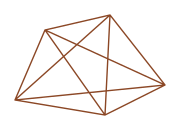
Illustrative line study
A smooth-looking digital object can be described by small, flat triangles. An STL file records this surface geometry, commonly transferring shapes from design software into 3D-printing workflows.
Describing the outside
Each triangle contributes a small part of the surface. Together, the triangles approximate the intended shape. A finer mesh can describe curves with more detail, but it also requires more data. The useful level of detail depends on what the shape is meant to communicate.
Geometry is not the whole object
The basic STL description focuses on shape rather than color or texture. A surface file also does not establish how a physical object will behave. Materials, dimensions and the manufacturing method belong to a wider set of decisions beyond the appearance of the mesh.
A hypothetical curved handle
Imagine two digital versions of a curved handle: one with visibly flat edges and another with a finer surface. The second may describe the curve more closely, yet neither image alone proves that a printed handle will fit or carry a load. Before treating a convincing model as a finished object, ask which properties the file describes and which must be evaluated elsewhere. A clear representation begins with knowing its limits.
Further reading: Adobe’s STL file guide.